
Protein
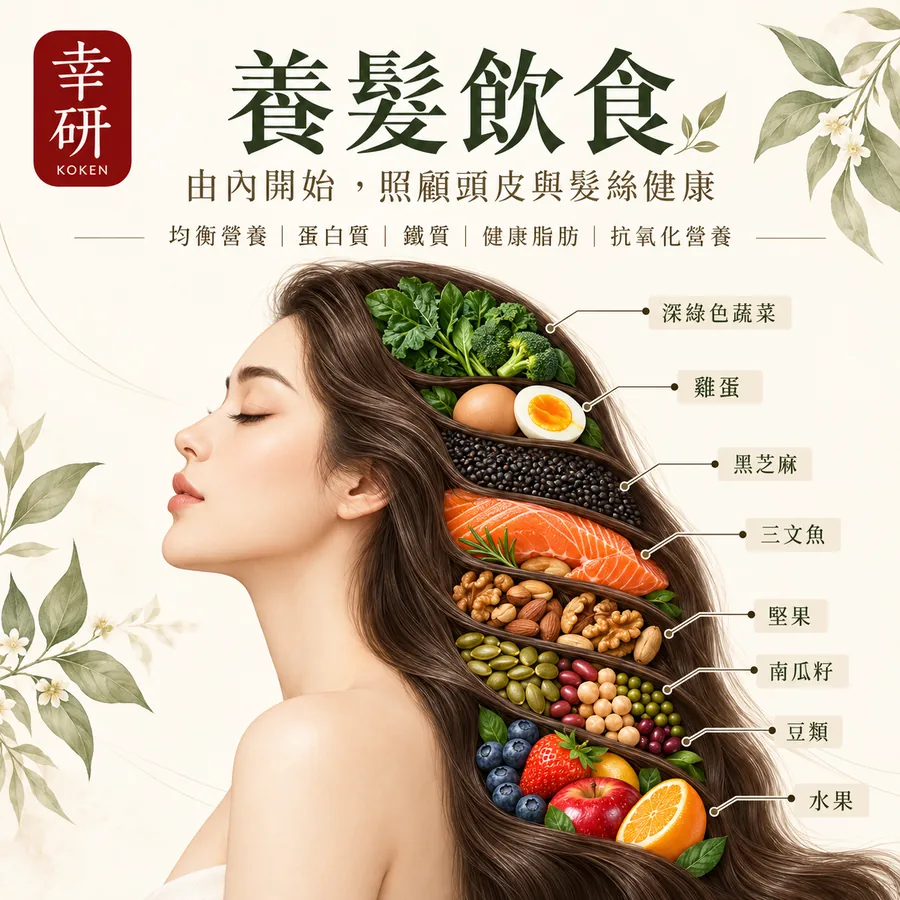
Hair is largely made of keratin, a protein. Fish, eggs, lean meat, dairy, tofu and legumes can all contribute to daily protein intake.
Iron and zinc
Iron supports red blood cells and oxygen transport, while zinc supports normal cellular function. Deficiency should be assessed rather than treated with long-term high-dose supplements without guidance.
B vitamins and biotin
Eggs, meat, fish, legumes, nuts and whole grains provide B vitamins. Biotin deficiency can be associated with thinning, but true deficiency is uncommon in most people.
Black sesame
Black sesame can be part of a balanced diet and provides fat, protein and micronutrients, but no single food should be described as a treatment or guarantee for hair growth.
When to consider supplements
Supplements are most useful for filling genuine dietary gaps. Persistent hair loss, fatigue or suspected iron, thyroid or other health issues should be assessed before relying on supplements.
Frequently asked questions
Can black sesame immediately improve hair loss?
No single food can guarantee hair growth. It can be included as part of a varied diet.
Are more supplement ingredients always better?
No. Appropriate doses, avoiding duplication and suitability for the individual matter more than ingredient count.
Can dieting affect hair?
Rapid weight loss or prolonged inadequate intake can affect the hair-growth cycle. Ensure adequate energy, protein and micronutrients.